
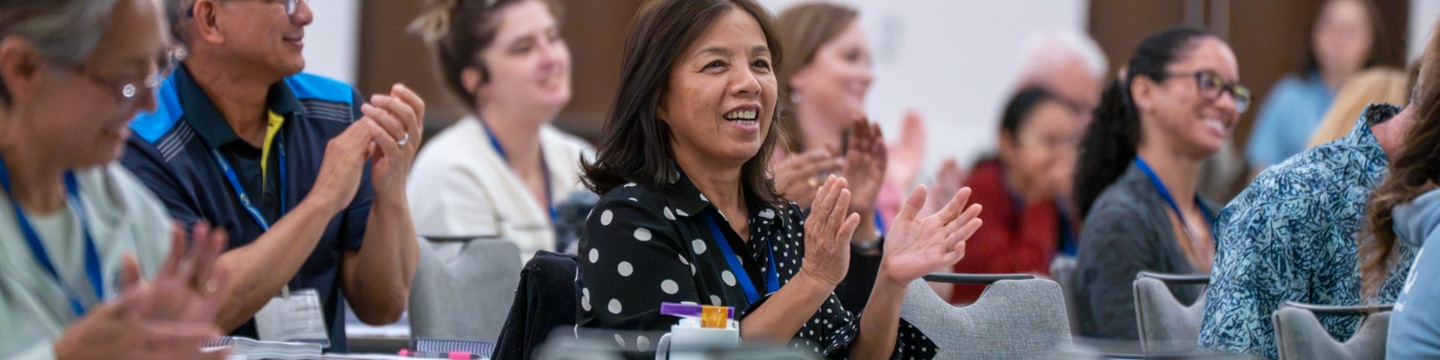
Why In-Person Conferences Still Matter: The Enduring Value of Face-to-Face Learning
In an era where educational content is available on demand and virtual learning opportunities continue to expand, healthcare professionals have more choices than ever for fulfilling their continuing medical education (CME) requirements. Online education offers convenience and accessibility, making it possible to learn from anywhere and at any time.
Even with these advances, healthcare professionals continue to place a high value on attending conferences in person.
The reason extends beyond earning CME credits. Live conferences create opportunities for collaboration, mentorship, networking, and professional connection that are difficult to replicate in a virtual environment. Research from both healthcare and meetings-industry sources suggests that face-to-face interactions contribute to stronger professional relationships, deeper engagement, more effective knowledge sharing, and a greater sense of community.
Learning Is More Than Information Transfer
Continuing education is often viewed as the process of acquiring new knowledge, but educational researchers increasingly recognize that learning is also a social activity.
In healthcare, much of what clinicians learn comes from formal presentations and from discussions with colleagues, observation of best practices, and participation in professional communities. Wenger's work on "communities of practice" describes how professionals develop expertise through shared learning experiences and interaction with peers.1
Live CME conferences create opportunities for these communities of practice to form and grow. Attendees learn from faculty presentations, but they also learn through conversations between sessions, discussions during question-and-answer periods, and informal exchanges with colleagues facing similar clinical challenges.
Research published in PNAS Nexus comparing virtual and in-person conferences found that while educational content can be effectively delivered online, face-to-face meetings generate significantly more opportunities for informal interaction, collaboration, and relationship building.2
These interactions can become the source of practical insights that clinicians can immediately apply in patient care.
Professional Connection Supports Professional Well-Being
Healthcare professionals continue to face significant levels of stress, burnout, and professional isolation.
The National Academy of Medicine identified social connection, professional support, and organizational culture as important contributors to clinician well-being.3
Research published in Mayo Clinic Proceedings consistently identified collegiality, professional relationships, and community as protective factors against physician burnout.4
While conferences cannot solve for burnout completely, they provide a valuable opportunity for clinicians to connect with peers who understand the realities of practice. Medicine has always been a profession grounded in trust, communication, mentorship, and community. When clinicians gather to learn together, they are doing more than earning continuing education credits. They are investing in relationships that sustain the profession and help them better serve their patients.
Face-to-Face Interactions Build Trust More Quickly
Whether clinicians are discussing difficult cases, sharing referral relationships, participating in quality improvement initiatives, or collaborating on research, trust enables meaningful professional partnerships.
Studies examining workplace relationships consistently show that face-to-face communication remains one of the most effective ways to establish trust and strengthen interpersonal relationships. Research highlighted by Psychology Today found that in-person interactions create greater engagement than virtual communication, helping participants build stronger interpersonal connections.5
Similarly, researchers at Northwestern University studying professional conferences found that attendees reported stronger community formation and collaboration outcomes during in-person events compared with virtual formats.6
Building Networks That Improve Patient Care
One of the most significant benefits of attending live medical conferences is the opportunity to expand professional networks.
Research on physician networks has demonstrated that professional relationships influence how knowledge spreads throughout healthcare systems and how rapidly evidence-based practices are adopted. Studies published in Health Affairs and other healthcare journals have shown that peer influence and professional connections play important roles in clinical decision-making and practice change.7
When clinicians attend conferences, they are building relationships that may later support referrals, consultations, collaborative research, mentorship opportunities, or access to specialized expertise.
The Professional Convention Management Association (PCMA) identifies community building and relationship development as among the primary reasons professionals continue to attend meetings in person despite the availability of virtual alternatives.8
In healthcare, these relationships frequently become professional resources that extend after the conference ends.
The Learning That Happens Between the Sessions
Ask experienced conference attendees about the most valuable part of a meeting, and many will not point to a specific lecture. Instead, they often recall a conversation.
Maybe it was a discussion about implementing a new guideline. Perhaps it was a chance meeting with a colleague who solved a similar practice challenge. Or maybe it was an introduction that eventually became a professional collaboration.
These interactions represent what educational researchers often call informal learning. While difficult to measure, informal learning contributes significantly to professional growth.
Meetings-industry research supports this observation. Studies highlighted by Meetings Today found that participants report higher engagement, stronger emotional connection, and greater satisfaction during in-person experiences compared with virtual interactions.9
The value of these experiences lies not only in the information exchanged but also in the relationships that form around that exchange of knowledge.
Why This Matters for Healthcare
Healthcare is fundamentally relational.
Patients place their trust in clinicians. Clinicians depend on colleagues for consultation and collaboration. Care teams rely on effective communication and mutual respect to deliver high-quality care.
The same principles that support patient care also support professional development.
When clinicians gather at a live conference, they do more than earn CME credits. They participate in a professional community. They share knowledge, build trust, expand networks, and strengthen relationships that can improve both their professional development and the care they provide.
The relationships formed at live conferences become sources of mentorship, collaboration, and innovation. Long before webinars, online courses, and digital platforms existed, healthcare professionals gathered to exchange ideas, learn from one another, and advance the practice of medicine.
Attending a live conference is not simply about being present in a meeting room. It is about investing in relationships that strengthen the profession, support colleagues, and ultimately improve patient care.
About CEC
Continuing Education Company, Inc. (CEC) is an independent, non-profit, 501 (c)(3) continuing medical education organization that has been developing and presenting CME events for more than 35 years. CEC’s mission is to develop and provide educational opportunities to improve the skills and knowledge of medical and healthcare professionals. All of the CEC's live conferences and CME events offer Prescribed credits approved by the American Academy of Family Physicians (AAFP). Continuing Education Company, Inc. (CEC) is accredited by the Accreditation Council for Continuing Medical Education (ACCME) to provide continuing medical education for physicians.
References
- Wenger E. Communities of Practice: Learning, Meaning, and Identity. Cambridge University Press, 1998.
- Caccioli F, et al. Face-to-face or face-to-screen: A Quantitative Comparison of In-Person and Virtual Conferences. PNAS Nexus. 2025.
- National Plan for Health Workforce Well-Being. National Academy of Medicine, 2022.
- Shanafelt TD, et al. Mayo Clinic Proceedings, multiple studies on physician well-being and professional satisfaction.
- Abrams Z. Beyond Zoom: How Meeting in Person Creates Connection. Psychology Today, 2024.
- Study Reveals Why In-Person Conferences Still Matter in a Virtual World . Northwestern University McCormick School of Engineering, 2025.
- Physician-Patient Sharing Networks and the Cost and Intensity of Care in US Hospitals . Barnett ML, Christakis NA, O'Malley AJ, et al.
- Why the Most Online Generation Still Shows Up for Events And How to Design for Them . PCMA Research & Insights.
- In-Person Engagement Exceeds Virtual, Research Explains Why . Meetings Today, 2026.
Upcoming CME Conferences & Online Learning
Want to attend a live CME conference or complete an online course from the comfort of home?
At Continuing Education Company, we make your medical continuing education fun, engaging, and relevant. Explore our conference calendar to view upcoming dates and destinations as well as CME365™ online courses and live streaming options.
For a limited time, take advantage of our Special Offer: attend one of our live conferences in person and receive a FREE online 15 credit CME course from CME365™.