
What to Expect at a CME Conference in Hawaii: The Pono Way to Professional Development
For primary care clinicians, the annual push to accumulate CME credits often means long days in windowless ballrooms, back-to-back lectures, and returning home more depleted than when you left. Hawaii CME conferences work differently — and not just because of the scenery.
At Continuing Education Company's 11th Annual Clinical Issues in Primary Care Conference, held May 11–15, 2026, at the Fairmont Orchid Resort on the Kohala Coast, the entire experience is built around a philosophy: Pono — the Hawaiian concept of doing what is right and balanced. That shapes everything from how the schedule is structured to what happens after your last morning session ends.
Here's what to actually expect.
The Half-Day Model: Why It Matters
Most conferences cram education into eight-hour blocks. This one doesn't.
Morning sessions are focused, high-yield, and done by midday. You'll cover the clinical content that matters most in primary care — chronic disease management, updated guidelines, preventive care, rural health challenges — with the kind of energy and attention it deserves. No afternoon fog. No passive listening while you count ceiling tiles.
That's intentional. The half-day model isn't a concession to the setting. It's the point.
When your brain isn't saturated, you retain more. When your afternoons are protected, you show up sharper the next morning. The structure itself encompasses the best methods used to facilitate learning.
Mornings: Focused Medical Education
Sessions are designed specifically for family physicians, internal medicine physicians, PAs, and NPs — with content calibrated to real practice gaps, not theoretical edge cases.
Expect:
-
Chronic disease management strategies you can apply when back in the clinic.
-
Current clinical guidelines with a practical implementation context
-
Preventive care updates and screening protocol changes
-
Rural and underserved care considerations
Faculty lead through case-based discussion and interactive formats — not slide-reading. The goal is clinical confidence, not credit accumulation.
Afternoons: Cultural Immersion, Not Just Downtime
This is where the Big Island experience becomes genuinely different.
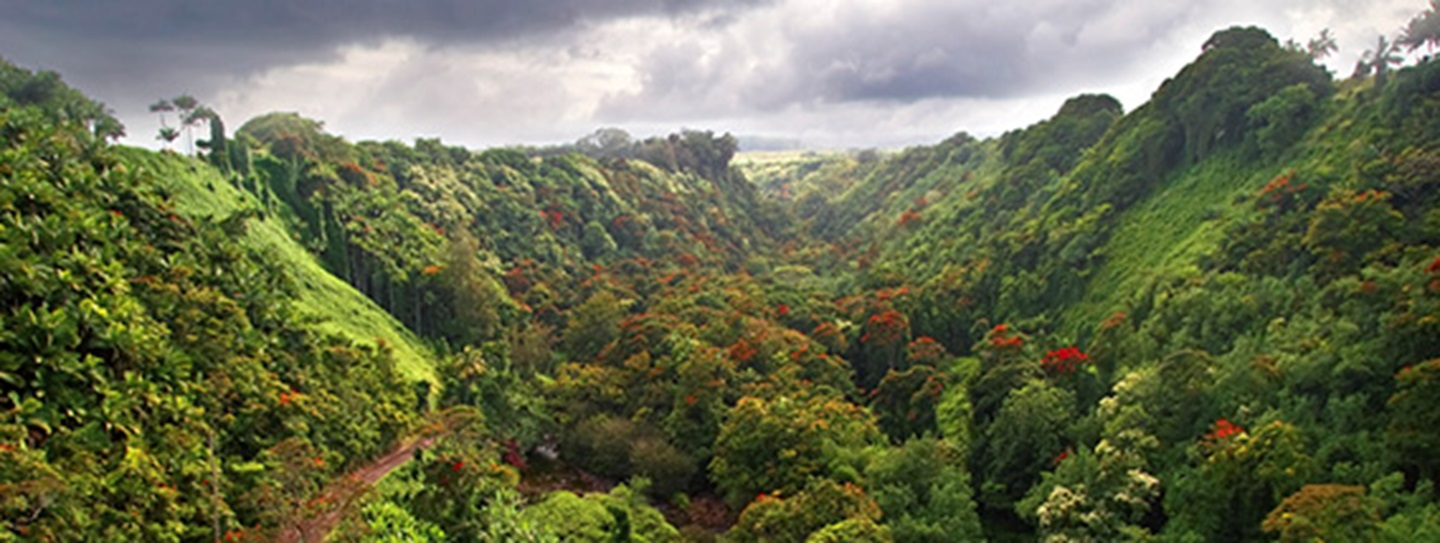
Afternoons and evenings are structured around Hawaiian history, land stewardship, and traditional practices — not as tourism add-ons, but as a real layer of the learning experience. The Big Island's landscape is unlike anywhere else: active volcanic terrain, ancient fishponds, rainforests, and coastline that indigenous Hawaiians managed sustainably for centuries.
You'll have the chance to explore:
-
Land stewardship and ahupuaʻa — the traditional Hawaiian system of managing land from mountain to sea, with real implications for how we think about community health and environmental medicine
-
Native plant medicine — the Big Island's botanical diversity provides context for conversations about integrative approaches and the roots of pharmacological knowledge
-
Cultural history and traditions — understanding place as inseparable from health, a perspective that reshapes how many clinicians think about patient communities
These aren't lectures. They happen in natural settings, at historical sites, and through guided experiences that make the content stick.
The Black Rock Experience
[View more about the experience here]
One of the most memorable parts of the Hawaii program is the time spent at Black Rock. It's the kind of moment that doesn't fit on a slide deck and doesn't show up in CME credit tallies — but tends to be what attendees remember most, and what brings many of them back year after year.
The Fairmont Orchid: Wellness as Infrastructure, Not Perk
Healthcare professionals face burnout at rates that the profession has been slow to address. The Fairmont Orchid on the Kohala Coast is the kind of venue that takes that seriously.
Nestled among oceanfront views, cascading waterfalls, and lush gardens, the resort is built around the kind of environment that genuinely restores rather than distracts. Expect access to world-class spa services, healthy cuisine featuring local ingredients, and the unstructured outdoor time that actually moves the needle on wellbeing.
The Big Island in May offers ideal conditions — warm, dry, and vibrant with spring bloom — without the crowds of peak season. This isn't a luxury add-on. It's the reason clinicians come back year after year.
Networking That Actually Happens
The informal setting does something that conference name badges and cocktail hours usually can't: it creates the conditions for real conversation.
Healthcare providers from across the country can end up on the same snorkeling excursion, manta ray tour or sitting next to each other by the pool. The professional connections that form here tend to be lasting in a memorable way.
CME Credits and What's Included
The 11th Annual Clinical Issues in Primary Care Conference offers up to 20 AMA PRA Category 1 Credits™, accepted across a wide range of certification bodies — including AAFP, AMA, ABIM MOC, AANPCB, ANCC, and AAPA — so regardless of your specialty or certification pathway, your credits are covered.
Beyond the live sessions, every registered in-person attendee also receives:
-
A free 15-credit online CME course (choose from three options)
-
Free live stream access — watch from your hotel room or anywhere else
-
Free 90-day access to conference recordings
-
Printed handouts plus links to online presentations
And if your plans change: register now, pay later. Full refunds (minus a small processing fee) are available for cancellations up to 30 days before the conference.
View full conference details, dates, and registration →
Getting There
The Fairmont Orchid is about 35 minutes from Kona International Airport (KOA) — the most convenient option for most attendees. If you're flying into Hilo (ITO), plan for about two hours. Continuing Education Company has secured rental car discounts through Enterprise, Hertz, and Avis to make getting around easier.
The Bottom Line
A CME conference in Hawaii isn't an indulgence you justify with credit hours. Done right — the Pono way — it's a genuinely different model for professional development: focused education, cultural depth, physical restoration, and the kind of reset that makes you a better clinician when you get home.
The Big Island in May is where that happens next.
Reserve your spot at the Big Island Spring CME →
Looking for more on traveling to Hawaii for CME? Browse our Hawaii CME travel articles for destination guides, packing tips, and what to do in the afternoons and evenings.