
Four Key Benefits and Risks of IOT in Healthcare
Since the Internet of Things (IOT) emerged in the healthcare industry, it has revealed a number of priceless solutions. It's helped lower costs, improve efficiency, and given physicians and nurses valuable insights that help guide treatments and reduce common medical errors. Research indicates that IoT implementation in healthcare can reduce operational costs by up to 25% while significantly improving patient outcomes through enhanced monitoring and data-driven decision making.
However, as IOT continues to revolutionize healthcare, some major flaws are surfacing. IOT can provide incredible benefits to physicians, nurses, and physician assistants, but it can also expose everyone involved to new risks.
As your organization continues or begins implementing and taking advantage of the solutions IOT offers to healthcare, it's important to have a keen understanding of both the benefits and the risks IOT brings. Let's take a closer look at some of those factors, starting with the benefits of IOT in healthcare.
Benefits of IoT in Healthcare
Wearable Devices
Wearable devices have become increasingly common for use by consumers. While products like Fitbits or the Apple Watch are capable of tracking users' heart rate and other metrics, other highly specialised healthcare products allow for the monitoring of complex metrics throughout a patient's daily life. Consumers should exercise caution as these devices are still not completely accurate and should not be used for diagnosis and treatment. The devices do monitor metrics like electrocardiograms and blood pressure to allow physicians and nurses to better understand their patients' health over the span of a month, rather than a mere 30-minute window during a visit.
Remote Monitoring
One of the most beneficial and widely applicable benefits of IOT in healthcare is the possibilities for remote monitoring. Remote monitoring allows physicians and nurses to streamline the patient-monitoring process, both in hospitals and while patients are at home. Glucose and heart-rate monitoring are the most common uses though monitoring for other conditions is also available.
Glucose Monitoring: Remote glucose monitoring allows physicians to get a more holistic view of their patients' glucose levels, which is essential for determining the best care plan for diabetic patients. This offers vastly more accurate results than traditional glucose monitoring and is easier on the patient.
Heart-Rate Monitoring: Conventional heart-rate monitors must choose either accuracy over time or patient mobility. With IOT devices, there is no settling: patient heart rates can be monitored accurately, remotely, and regularly.
Other Kinds of Remote Monitoring: Other conditions like Parkinson's disease and depression have been exceedingly difficult for physicians and nurses to monitor in the past. Patients could only be monitored for a brief period, resulting in clinicians only getting a snapshot of the patient's health. Remote monitoring with wearable devices for conditions like these allows clinicians to save time and develop more accurate treatment plans.
Ingestible Sensors
A more radical version of wearable IOT devices is ingestible sensors, or 'intelligent pills.' These sensors typically work by relaying information from the 'pill' to a wearable patch, which records and collects data.
While the use and application of ingestible sensors is still nascent and less widely adopted compared to wearables, it could prove to be a massive leap forward in diagnostic accuracy. These devices could significantly reduce the need for invasive procedures and mitigate costly misdiagnoses.
Robotic Surgery
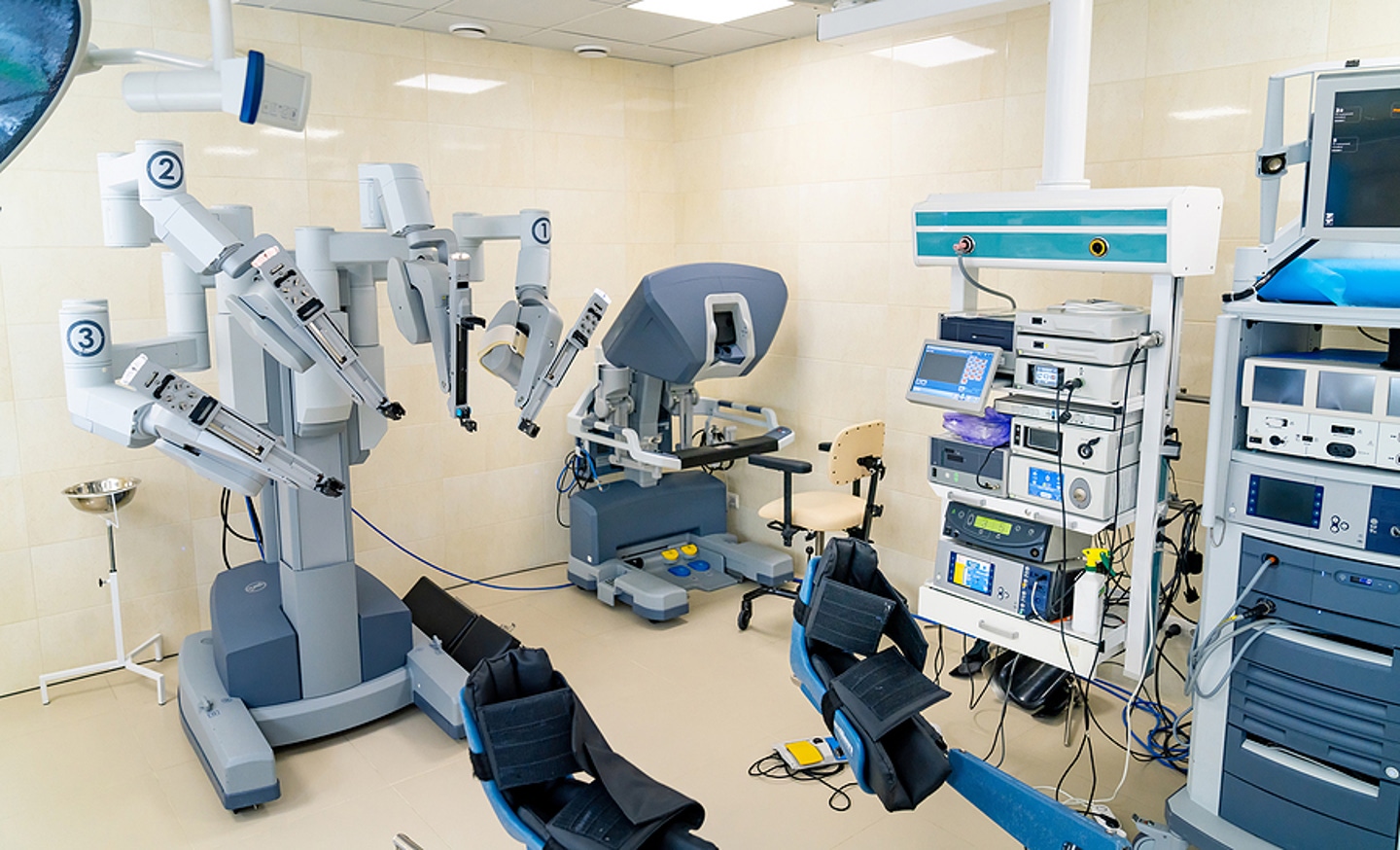
Robot-assisted surgery is an increasingly popular IOT use in healthcare. Robotic surgery could allow surgeons to maximize precision, minimize bleeding, and reduce the invasiveness of a procedure. Additionally, patients who undergo robot-assisted surgery may have faster recovery times.
With the advent of 5G networks, patients could potentially be operated on by a robot controlled by a specialist thousands of miles away. Not only could robotic surgery improve patient outcomes, it also has the potential to increase access to specialists.
Smart Hospital Management Systems
IoT technology is revolutionizing hospital operations through comprehensive smart management systems. These integrated platforms leverage connected devices to optimize multiple aspects of healthcare delivery.
Asset Tracking: IoT-enabled tracking systems allow healthcare organizations to monitor the real-time location and status of critical equipment, from wheelchairs and infusion pumps to defibrillators. This technology reduces equipment loss, minimizes search time, and ensures that life-saving devices are available when needed most.
Inventory Management: Smart inventory systems automatically track medical supplies, pharmaceuticals, and consumables throughout the facility. These systems can predict usage patterns, automatically reorder supplies when levels run low, and prevent costly stockouts or expired medications. Healthcare organizations report up to 15% reductions in inventory costs through IoT-enabled management.
Staff Scheduling and Optimization: IoT devices can monitor patient acuity levels, bed occupancy rates, and workflow patterns to optimize staffing schedules. This ensures appropriate nurse-to-patient ratios while reducing overtime costs and preventing staff burnout.
Digital Twin Technology
Digital twin technology represents one of the most innovative applications of IoT in healthcare, creating virtual replicas of patients, procedures, and systems to enhance care delivery.
Virtual Patient Replicas: Healthcare providers can create comprehensive digital twins of individual patients using data from multiple IoT devices. These virtual models incorporate real-time physiological data, medical history, and genetic information to predict treatment responses and identify potential complications before they occur.
Surgical Simulation: Surgeons can practice complex procedures on digital twins of their patients, using real anatomical data to rehearse operations and identify potential challenges. This preparation significantly reduces surgical risks and improves patient outcomes.
Treatment Modelling: Digital twins enable clinicians to test different treatment protocols virtually, predicting how patients might respond to various interventions without exposing them to unnecessary risks or side effects.
AI Integration and Predictive Analytics
The combination of IoT devices with artificial intelligence creates powerful predictive capabilities that transform patient care:
Predictive Health Analytics: AI algorithms analyze continuous data streams from IoT devices to identify patterns that may indicate developing health issues. For example, subtle changes in heart rate variability detected by wearable devices can predict cardiac events days before traditional symptoms appear.
Clinical Decision Support: AI-powered systems process data from multiple IoT sources to provide evidence-based recommendations to clinicians. These systems can identify drug interactions, suggest optimal treatment protocols, and alert providers to potential complications based on real-time patient data.
Population Health Management: Large-scale analysis of IoT data helps healthcare organizations identify trends, predict disease outbreaks, and optimize resource allocation across patient populations.
Telemedicine Integration
IoT technology seamlessly integrates with telemedicine platforms to enable comprehensive remote healthcare delivery.
Connected Health Consultations: Patients can participate in virtual appointments while their vital signs are continuously monitored through IoT devices. This real-time physiological data provides clinicians with objective health metrics during remote consultations, improving diagnostic accuracy.
Remote Chronic Disease Management: IoT-enabled telemedicine platforms allow healthcare providers to monitor patients with chronic conditions like diabetes, hypertension, and heart disease from their homes. Automated data collection and analysis enable proactive interventions before complications develop.
Rural Healthcare Access: For clinicians serving remote and rural populations, IoT-integrated telemedicine bridges geographic barriers. Patients in underserved areas can access specialist care while their local providers receive real-time patient data to support clinical decision-making.
Risks of IOT in Healthcare
IOT in healthcare will be revolutionary, but it won't come without significant struggles. Currently, there are a number of risks associated with IOT in healthcare. Addressing these is critical for physicians, nurses, physician assistants, and all healthcare specialists to remain compliant.
Problems with IOT Data
One of the largest issues with IOT in healthcare is the data it creates. Wearable devices that track a user's location in addition to their health information are vulnerable to be attacked and exploited, risking a patient's privacy. Additionally, there is a debate over who owns the data that is produced and transmitted by IOT devices such as wearables.
HIPAA Compliance
HIPAA compliance runs hand in hand with the problems IOT in healthcare faces with data. As each device is connected to several networks, the vulnerabilities each device is exposed to are multiplied. Each network a device is connected to should be HIPAA-compliant and secured, but this can easily be missed.
Additionally, physicians, nurse practitioners, physician assistants, and other health professionals need to be aware of what private health information (PHI) is being collected by an IOT device. Otherwise, they could be violating privacy regulations.
Software or Hardware Malfunctions
Anybody who has used a smartphone or computer can testify to the fact that systems using and transferring information through complex software and hardware can fail. The same holds true for wearables, surgical robots, and ingestible sensors. However, when it comes to IOT in healthcare, the stakes are much higher.
Legacy equipment that fails, software that carries a bug, or systems that aren't adequately protected against malware or other attacks all pose a serious threat to healthcare organizations. Distributed denial of service (DDoS) attacks could prevent nurse practitioners, physicians, and physician assistants from accessing crucial information when they need it most.
Injuries
The most obvious, immediate risks of IOT devices are injuries to patients. Heart-rate monitoring devices that fail to notify a clinician at the proper time could lead to serious injuries and health complications.
The Future of IoT in Healthcare
As healthcare organizations continue to adopt IoT technologies, the potential for improved patient outcomes and operational efficiency continues to expand. The integration of IoT with emerging technologies like 5G networks, edge computing, and advanced AI algorithms promises even greater capabilities in the years ahead.
For healthcare providers, staying informed about both the opportunities and challenges of IoT implementation is essential. Organizations that thoughtfully address security concerns, ensure regulatory compliance, and focus on patient-centred applications will be best positioned to leverage the transformative potential of IoT in healthcare.
The key to successful IoT adoption lies in balancing innovation with safety, ensuring that technological advances serve to enhance rather than complicate the fundamental mission of healthcare: delivering excellent patient care.
Upcoming CME Conferences & Online Learning
Want to attend a live CME conference or complete an online course from the comfort of home?
At Continuing Education Company, we make your medical continuing education fun, engaging, and relevant. Explore our conference calendar to view upcoming dates and destinations as well as CME365™ online courses and live streaming options.
For a limited time, take advantage of our Special Offer: attend one of our live conferences in person and receive a FREE online 15 credit CME course from CME365™.